
Studying abroad is a dream for millions of students around the world. The opportunity to receive a high-quality education, experience a new culture, and build a global network can significantly improve a student’s future career prospects. However, the cost of studying in another country often discourages many talented students from pursuing their educational goals. Tuition fees, accommodation expenses, travel costs, health insurance, and daily living expenses can make international education seem unaffordable.
Fortunately, scholarships provide a solution. Every year, governments, universities, private organizations, and international institutions offer billions of dollars in scholarship funding to help students achieve their academic ambitions. In many cases, scholarships can cover all educational expenses, allowing students to study abroad for little or no cost.
This guide explains how international students can find scholarships, prepare successful applications, and maximize their chances of studying abroad for free in 2026.
Why Study Abroad?
Studying abroad offers numerous benefits beyond obtaining a degree. Students gain exposure to different cultures, improve language skills, develop independence, and build international connections that can be valuable throughout their careers.
Employers increasingly value graduates who possess global experience and cross-cultural communication skills. International education also provides access to advanced research facilities, innovative teaching methods, and specialized academic programs that may not be available in a student’s home country.
Many students choose to study abroad because it can open doors to better career opportunities, higher salaries, and professional growth.
Understanding Scholarships
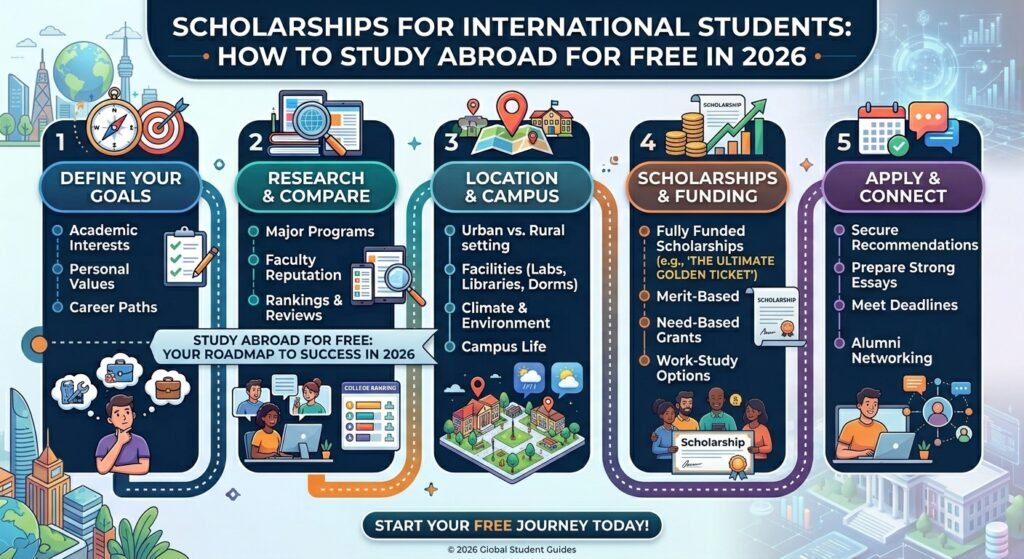
A scholarship is financial assistance awarded to students to support their education. Unlike student loans, scholarships do not need to be repaid. They can cover tuition fees, living expenses, books, travel costs, or a combination of these expenses.
Scholarships are generally divided into several categories:
Merit-Based Scholarships
These scholarships are awarded to students with outstanding academic achievements, leadership abilities, or exceptional talents.
Students with strong grades, high test scores, and impressive extracurricular activities often qualify for merit-based scholarships.
Need-Based Scholarships
Need-based scholarships are designed for students who demonstrate financial need. These scholarships help talented students who may not otherwise be able to afford higher education.
Government Scholarships
Many governments sponsor international students through fully funded scholarship programs. These scholarships often cover tuition fees, accommodation, airfare, and monthly living allowances.
University Scholarships
Universities around the world offer scholarships to attract talented students from different countries. These scholarships may be fully funded or partially funded.
Private and Organization Scholarships
Numerous companies, foundations, and nonprofit organizations provide scholarships to support education and promote international cooperation.
Countries Offering Excellent Scholarship Opportunities
Several countries are particularly known for providing generous scholarships to international students.
United States
The United States remains one of the most popular study destinations globally. Many American universities offer substantial financial aid packages and merit scholarships.
Institutions such as Harvard, Yale, Stanford, MIT, and Arizona State University provide various scholarship opportunities for international students.
Popular scholarship programs include:
- Fulbright Program
- Hubert Humphrey Fellowship
- University-specific scholarships
- Private foundation scholarships
Canada
Canada is recognized for its welcoming environment and high-quality education system. International students can access numerous scholarship opportunities at Canadian universities.
Popular scholarships include:
- Vanier Canada Graduate Scholarships
- Lester B. Pearson International Scholarship
- University entrance scholarships
- Provincial funding programs
United Kingdom
The United Kingdom hosts some of the world’s most prestigious universities and offers several fully funded scholarship programs.
Popular scholarships include:
- Chevening Scholarships
- Commonwealth Scholarships
- Gates Cambridge Scholarships
- University-specific awards
Australia
Australia continues to attract students from around the world through its excellent education system and scholarship opportunities.
Major scholarships include:
- Australia Awards Scholarships
- Research Training Program Scholarships
- University merit scholarships
Germany
Germany has become a leading destination for international students because many public universities charge little or no tuition fees.
The country also offers scholarships through organizations that support international education and research.
Fully Funded Scholarships
Fully funded scholarships are highly competitive because they cover nearly all educational expenses.
These scholarships typically include:
- Full tuition fees
- Accommodation costs
- Monthly living allowance
- Health insurance
- Airfare expenses
- Study materials
Receiving a fully funded scholarship can allow students to complete their education without significant financial burden.
How to Find Scholarships
Finding scholarships requires careful research and preparation.
University Websites
University websites are among the best sources of scholarship information. Most institutions maintain dedicated scholarship pages that explain eligibility requirements, application procedures, and deadlines.
Students should regularly visit the official websites of universities they are interested in attending.
Government Education Portals
Government websites often provide detailed information about national scholarship programs available to international students.
These portals typically include eligibility criteria, funding details, and application instructions.
Scholarship Databases
Many online scholarship databases help students discover opportunities based on their academic background, field of study, and nationality.
Students should verify all scholarship information through official sources before applying.
Educational Organizations
International organizations frequently offer scholarships designed to support educational development and cultural exchange.
Building a Strong Scholarship Application
Securing a scholarship requires more than simply submitting an application form. Students must demonstrate why they deserve financial support.
Academic Excellence
Strong academic performance remains one of the most important factors in scholarship selection.
Students should focus on maintaining high grades throughout their studies and participating actively in academic activities.
Leadership Experience
Scholarship committees often look for future leaders who can make positive contributions to society.
Leadership experiences may include:
- Student organizations
- Community service projects
- Volunteer activities
- Team management roles
Extracurricular Activities
Participation in extracurricular activities helps students demonstrate initiative, teamwork, and personal development.
Activities such as sports, debate competitions, cultural programs, and volunteer work can strengthen scholarship applications.
Writing an Effective Personal Statement
A personal statement is often one of the most important components of a scholarship application.
This essay allows students to explain:
- Academic goals
- Career aspirations
- Leadership experiences
- Personal achievements
- Reasons for applying
A strong personal statement should be clear, authentic, and focused on future objectives.
Students should avoid generic statements and instead provide specific examples that demonstrate their abilities and ambitions.
Obtaining Strong Recommendation Letters
Recommendation letters provide independent evidence of a student’s abilities and character.
Students should request recommendations from individuals who know them well, such as:
- Teachers
- Professors
- Academic advisors
- Employers
- Community leaders
Strong recommendation letters highlight academic performance, leadership potential, and personal qualities.
Preparing for Scholarship Interviews
Some scholarship programs require interviews as part of the selection process.
Interviewers may ask questions about:
- Educational background
- Career goals
- Leadership experiences
- Reasons for choosing a particular country or university
- Future contributions to society
Students should practice answering common interview questions and prepare thoughtful responses that reflect their goals and values.
Common Mistakes to Avoid
Many students lose scholarship opportunities because of avoidable mistakes.
Missing Deadlines
Late applications are often automatically rejected.
Students should create a timeline and track all important deadlines carefully.
Incomplete Applications
Missing documents can significantly reduce the chances of success.
Applicants should review requirements multiple times before submission.
Generic Essays
Scholarship committees read thousands of applications each year.
Generic essays fail to stand out and often lack impact.
Ignoring Eligibility Requirements
Students should carefully review eligibility criteria before applying to avoid wasting time on scholarships they do not qualify for.
Tips for Increasing Scholarship Success
Students can improve their chances by following several strategies:
- Apply to multiple scholarships
- Start preparations early
- Maintain strong academic performance
- Develop leadership skills
- Participate in community service
- Improve communication abilities
- Seek feedback on application materials
- Stay organized throughout the process
Persistence is important because scholarship competitions are often highly competitive.
The Long-Term Benefits of Scholarships
Receiving a scholarship offers benefits beyond financial assistance.
Scholarship recipients often gain:
- Recognition for academic achievement
- Access to professional networks
- Leadership development opportunities
- International exposure
- Enhanced career prospects
Many scholarship programs also provide mentorship opportunities, internships, and connections with successful professionals.
Future Trends in International Scholarships
As global education continues to expand, scholarship opportunities are expected to increase in areas such as:
- Artificial Intelligence
- Data Science
- Engineering
- Healthcare
- Environmental Sustainability
- Renewable Energy
- Technology Innovation
Students pursuing studies in these fields may find additional funding opportunities in the coming years.