
Introduction
Choosing the right university is one of the most important decisions a student can make. With thousands of institutions around the world offering various academic programs, students often look for universities that combine academic excellence, affordability, innovation, and strong career opportunities. One institution that consistently attracts students from around the world is Arizona State University (ASU).
Known for its commitment to innovation, research, and student success, Arizona State University has become one of the most popular destinations for international students seeking a high-quality education in the United States. ASU offers hundreds of degree programs, state-of-the-art facilities, diverse student communities, and extensive support services designed to help students thrive academically and professionally.
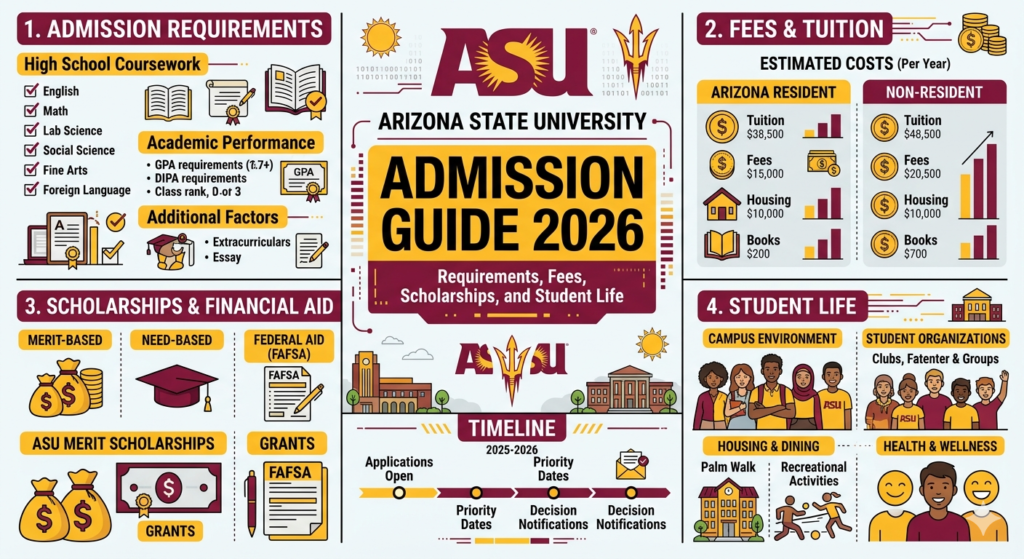
This comprehensive guide provides everything prospective students need to know about Arizona State University admissions in 2026, including admission requirements, tuition fees, scholarships, campus life, housing options, career opportunities, and application tips.
Overview of Arizona State University
Arizona State University is a public research university located in the state of Arizona. Founded in 1885, the university has grown into one of the largest and most respected higher education institutions in the United States.
ASU serves students from more than 130 countries and offers a broad range of undergraduate, graduate, and doctoral programs. The university has earned international recognition for innovation, entrepreneurship, sustainability, and research excellence.
One of ASU’s defining characteristics is its commitment to inclusivity and accessibility. The university focuses on ensuring that students from diverse backgrounds have opportunities to succeed academically and professionally.
Why International Students Choose ASU
International students select Arizona State University for many reasons.
Academic Excellence
ASU offers high-quality programs across numerous disciplines, including engineering, business, computer science, healthcare, education, law, and social sciences.
Innovation
The university has developed a reputation for encouraging creativity, innovation, and entrepreneurship among students and faculty.
Career Opportunities
ASU maintains strong relationships with employers across multiple industries, helping students gain valuable internships and employment opportunities.
Diverse Community
Students from around the world contribute to a vibrant and multicultural learning environment.
Modern Facilities
The university invests heavily in technology, research centers, libraries, laboratories, and student support services.
ASU Campuses
Arizona State University operates multiple campuses, each with unique strengths and academic offerings.
Tempe Campus
The Tempe Campus is the largest and most well-known ASU campus. It offers a broad range of academic programs and serves as the center of university life.
Students enjoy access to:
- Research laboratories
- Libraries
- Sports facilities
- Student organizations
- Cultural events
Downtown Phoenix Campus
This campus focuses on programs related to journalism, public service, healthcare, law, and government.
Polytechnic Campus
The Polytechnic Campus specializes in applied sciences, engineering technologies, aviation, and technical education.
West Valley Campus
The West Valley Campus offers programs in education, business, social sciences, and interdisciplinary studies.
Admission Requirements for Undergraduate Students
Students applying for undergraduate programs at ASU must meet several admission requirements.
Academic Qualifications
Applicants are expected to demonstrate strong academic performance throughout high school.
Required documents generally include:
- Official academic transcripts
- Secondary school certificates
- Graduation documentation
Competitive applicants typically maintain strong grades in core subjects such as mathematics, science, English, and social studies.
English Language Requirements
International students whose first language is not English may need to demonstrate English proficiency.
Accepted tests often include:
IELTS
Many programs require competitive IELTS scores.
TOEFL
TOEFL scores are commonly accepted for admission.
Duolingo English Test
Some programs also recognize Duolingo English Test results.
Students should verify specific score requirements for their chosen programs.
Standardized Tests
While many universities have adopted test-optional policies, some programs may still consider standardized test scores.
Examples include:
- SAT
- ACT
Strong scores can enhance an application, particularly for scholarship consideration.
Graduate Admission Requirements
Graduate admissions are generally more specialized.
Applicants may need:
- Bachelor’s degree from an accredited institution
- Academic transcripts
- Statement of purpose
- Recommendation letters
- Resume or curriculum vitae
- English language proficiency scores
Certain programs may require additional materials such as portfolios, interviews, or research proposals.
Popular Degree Programs at ASU
Arizona State University offers hundreds of academic programs.
Some of the most popular include:
Computer Science
Computer Science remains one of the university’s most sought-after programs.
Students learn:
- Programming
- Artificial Intelligence
- Machine Learning
- Software Engineering
- Cybersecurity
Business Administration
Business students gain knowledge in:
- Finance
- Marketing
- Accounting
- Entrepreneurship
- International Business
The program emphasizes practical learning and industry engagement.
Engineering
Engineering programs cover:
- Mechanical Engineering
- Electrical Engineering
- Civil Engineering
- Aerospace Engineering
- Biomedical Engineering
Students benefit from modern laboratories and research opportunities.
Data Science
As organizations increasingly rely on data-driven decision-making, Data Science programs continue to grow in popularity.
Students learn:
- Statistics
- Data Analysis
- Programming
- Predictive Modeling
- Artificial Intelligence
Health Sciences
Healthcare-related programs prepare students for careers in:
- Nursing
- Public Health
- Healthcare Management
- Medical Research
Tuition Fees in 2026
Tuition costs vary depending on the program and student status.
International students typically pay higher tuition rates than domestic students.
Expenses may include:
Tuition
Program-specific educational fees.
Housing
On-campus or off-campus accommodation.
Books and Supplies
Educational materials and textbooks.
Health Insurance
Required coverage for many international students.
Personal Expenses
Transportation, food, entertainment, and miscellaneous costs.
Students should carefully review updated tuition information before applying.
Scholarships for International Students
One of the main reasons international students choose ASU is the availability of scholarships.
Merit-Based Scholarships
Academic excellence may qualify students for merit-based awards.
Selection factors often include:
- Grade point average
- Academic achievements
- Leadership experience
International Student Scholarships
ASU offers scholarships specifically designed to support international students.
These awards can significantly reduce tuition costs.
Departmental Scholarships
Academic departments may provide additional funding opportunities.
Students should regularly review departmental websites for updates.
External Scholarships
Students can also seek funding through:
- Government programs
- Private organizations
- International foundations
Combining multiple funding sources may help reduce educational expenses substantially.
Student Housing Options
ASU provides several housing options to accommodate different preferences and budgets.
On-Campus Housing
Benefits include:
- Proximity to classes
- Enhanced student engagement
- Access to university resources
- Greater convenience
Off-Campus Housing
Many students choose apartments or shared housing near campus.
Advantages include:
- Greater independence
- Flexible living arrangements
- Potential cost savings
Students should compare costs and amenities before making decisions.
Student Life at ASU
University life extends far beyond academics.
ASU offers a vibrant student experience through numerous activities and organizations.
Student Clubs
Students can participate in clubs related to:
- Technology
- Business
- Culture
- Sports
- Arts
- Community Service
Sports and Recreation
Athletic activities contribute to campus life.
Students have access to:
- Fitness centers
- Sports teams
- Recreational programs
- Wellness initiatives
Cultural Diversity
ASU’s international student population creates opportunities for cultural exchange and global learning.
Students can attend:
- International festivals
- Cultural celebrations
- Leadership events
- Networking programs
Career Services and Employment Opportunities
A major advantage of attending ASU is access to career development resources.
Internship Opportunities
Students gain practical experience through internships with leading organizations.
Internships help students:
- Develop professional skills
- Build networks
- Improve employability
Career Counseling
Career advisors assist students with:
- Resume preparation
- Interview practice
- Career planning
- Job search strategies
Employer Connections
ASU hosts career fairs and networking events that connect students with employers.
These opportunities often lead to internships and full-time employment.
Research Opportunities
ASU is recognized as a leading research institution.
Students can participate in research projects involving:
- Artificial Intelligence
- Sustainability
- Healthcare Innovation
- Engineering
- Environmental Science
Research experience strengthens academic credentials and career prospects.
International Student Support Services
Moving to another country can be challenging.
ASU offers dedicated support services to help international students succeed.
Services include:
- Immigration guidance
- Academic advising
- Orientation programs
- Cultural adjustment support
- Language assistance
These resources help students transition smoothly into university life.
Application Process
Applying to Arizona State University involves several steps.
Step 1: Choose a Program
Research available programs and identify those aligned with your academic and career goals.
Step 2: Prepare Documents
Gather required materials such as:
- Academic transcripts
- Test scores
- Passport information
- Recommendation letters
Step 3: Complete the Application
Submit the online application and ensure all information is accurate.
Step 4: Submit Supporting Materials
Upload or send all required documents before application deadlines.
Step 5: Monitor Application Status
Students can track their applications through university portals.
Respond promptly to requests for additional information.
Tips for Successful Admission
Maintain Strong Academic Performance
Good grades remain one of the most important admission factors.
Develop Leadership Experience
Participation in leadership and extracurricular activities strengthens applications.
Write a Strong Personal Statement
A compelling essay can help distinguish applicants from competitors.
Apply Early
Submitting applications early may improve scholarship opportunities.
Verify Requirements
Different programs may have unique admission requirements.
Always review official guidelines carefully.
Advantages of Studying at ASU
Students benefit from:
- High-quality education
- Innovative learning environment
- Global reputation
- Research opportunities
- Career support services
- Diverse student community
- Strong employer connections
These factors contribute to ASU’s growing popularity among international students.