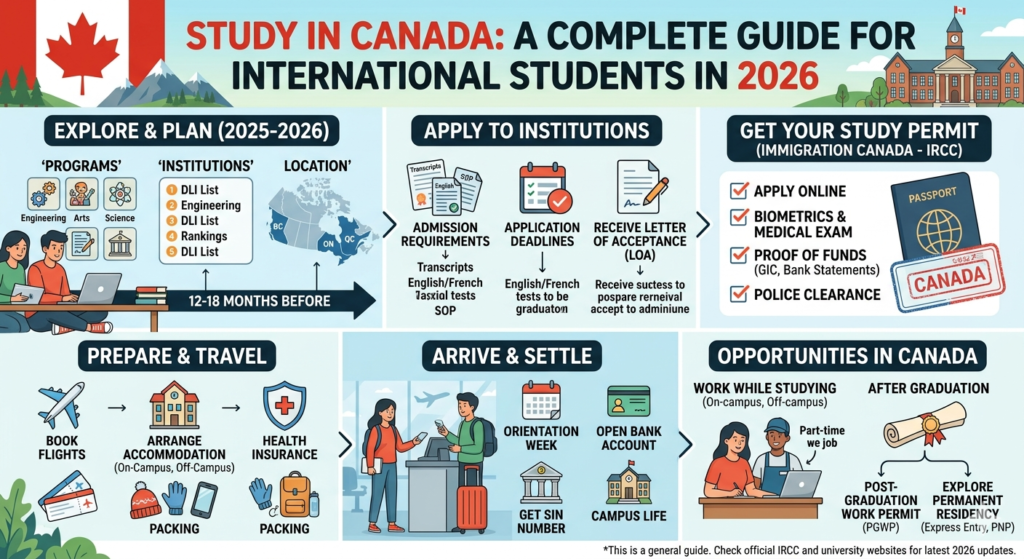

Canada has become one of the most popular destinations for international students seeking a high-quality education, a welcoming environment, and excellent career opportunities. Every year, hundreds of thousands of students from around the world choose Canada for higher education because of its globally recognized universities, affordable tuition compared to many other Western countries, multicultural society, and strong immigration pathways.
Studying in Canada offers much more than just earning a degree. Students gain access to world-class education, cutting-edge research opportunities, diverse cultural experiences, and valuable work experience that can help them build successful careers. Canadian institutions are known for their academic excellence, innovation, and commitment to student success.
In recent years, Canada has consistently ranked among the best countries for education, quality of life, safety, and employment opportunities. These factors make it an attractive option for students who want to achieve both academic and professional goals.
This comprehensive guide explores everything international students need to know about studying in Canada in 2026, including universities, admission requirements, tuition fees, scholarships, student visas, living expenses, work opportunities, and pathways to permanent residency.
Why Choose Canada for Higher Education?
Canada offers numerous advantages that attract students from every corner of the globe.
Globally Recognized Education
Canadian universities are respected worldwide for their academic standards and research excellence. Degrees earned from Canadian institutions are recognized by employers and educational organizations internationally.
Graduates often find opportunities in both Canadian and global job markets.
Affordable Education
Compared to countries such as the United States, the United Kingdom, and Australia, Canada often provides a more affordable educational experience.
Students may benefit from:
- Lower tuition fees
- Reasonable living expenses
- Scholarship opportunities
- Work-study options
This affordability makes Canada accessible to a wider range of students.
Safe and Welcoming Environment
Canada consistently ranks among the safest countries in the world.
International students appreciate:
- Political stability
- Low crime rates
- Respect for diversity
- Friendly communities
The country’s multicultural society helps students feel welcome regardless of their nationality, religion, or background.
Post-Graduation Opportunities
Canada offers excellent opportunities for graduates to gain work experience after completing their studies.
Many students choose Canada because it provides pathways to:
- Employment
- Long-term work permits
- Permanent residency
- Citizenship opportunities
These advantages make Canada attractive for students seeking long-term career development.
Understanding the Canadian Education System
Canada’s higher education system includes universities, colleges, and technical institutions.
Universities
Universities primarily focus on academic and research-based education.
Students can pursue:
- Bachelor’s degrees
- Master’s degrees
- Doctoral degrees
Universities typically emphasize theoretical knowledge, research, and academic development.
Colleges
Colleges generally focus on practical and career-oriented education.
Programs often include:
- Diplomas
- Certificates
- Applied degrees
Many students choose colleges to gain industry-specific skills and enter the workforce quickly.
Top Universities in Canada
Canada is home to several internationally recognized institutions.
University of Toronto
The University of Toronto is widely regarded as one of Canada’s leading universities.
Strengths include:
- Medicine
- Engineering
- Business
- Computer Science
- Research
The university attracts students from more than 160 countries.
University of British Columbia
The University of British Columbia (UBC) is known for academic excellence, sustainability initiatives, and research innovation.
Popular programs include:
- Environmental Science
- Engineering
- Business
- Health Sciences
McGill University
McGill University is one of Canada’s most prestigious institutions and has a strong international reputation.
Students often choose McGill for:
- Medicine
- Law
- Science
- Arts
University of Alberta
The University of Alberta is recognized for research excellence and strong engineering programs.
University of Waterloo
The University of Waterloo is famous for its cooperative education programs and strong connections with technology companies.
Its programs in:
- Computer Science
- Engineering
- Mathematics
are highly regarded internationally.
Popular Fields of Study in Canada
International students choose Canada for a wide range of academic disciplines.
Computer Science
Growing demand for technology professionals has increased interest in computer science programs.
Students study:
- Programming
- Artificial Intelligence
- Data Science
- Cybersecurity
Business and Management
Business degrees remain among the most popular choices.
Areas include:
- Finance
- Marketing
- International Business
- Entrepreneurship
Engineering
Engineering programs attract students seeking careers in:
- Civil Engineering
- Mechanical Engineering
- Electrical Engineering
- Software Engineering
Healthcare and Nursing
Canada’s healthcare sector creates strong demand for qualified professionals.
Environmental Sciences
Canada’s focus on sustainability supports growth in environmental studies and renewable energy programs.
Admission Requirements
Admission requirements vary depending on the institution and program.
Undergraduate Admissions
Most universities require:
- Secondary school transcripts
- Academic certificates
- Proof of English proficiency
- Application forms
- Personal statements (for some programs)
Graduate Admissions
Graduate applicants may need:
- Bachelor’s degree
- Academic transcripts
- Recommendation letters
- Statement of purpose
- Resume or curriculum vitae
Some programs may require interviews or additional documentation.
English Language Requirements
International students whose first language is not English usually need to demonstrate language proficiency.
Commonly accepted tests include:
IELTS
Widely accepted across Canadian institutions.
TOEFL
Recognized by most universities and colleges.
Duolingo English Test
Increasingly accepted by many institutions.
Students should verify specific score requirements for their chosen programs.
Tuition Fees in Canada
Tuition costs vary significantly depending on the institution, program, and level of study.
Factors influencing costs include:
- Program type
- University reputation
- Province
- Degree level
Professional programs such as medicine, dentistry, and business often have higher tuition fees than arts or humanities programs.
Living Expenses
Students should budget carefully for living costs.
Major expenses include:
Accommodation
Options include:
- University residences
- Shared apartments
- Private rentals
Food
Monthly grocery and dining expenses vary depending on location and lifestyle.
Transportation
Many cities provide student discounts for public transportation.
Health Insurance
Health coverage requirements vary by province.
Students should understand insurance obligations before arrival.
Scholarships for International Students
Scholarships can significantly reduce educational expenses.
Merit-Based Scholarships
Awarded based on academic excellence and achievements.
Entrance Scholarships
Many universities automatically consider qualified students for entrance awards.
Government Scholarships
Various government-funded programs support international students.
Research Scholarships
Graduate students often qualify for research funding opportunities.
Students should begin scholarship searches early to maximize opportunities.
Student Visa Process
International students typically require a study permit to study in Canada.
Step 1: Obtain Admission
Receive an official acceptance letter from a designated learning institution.
Step 2: Gather Documents
Common requirements include:
- Passport
- Acceptance letter
- Financial proof
- Photographs
- Immigration forms
Step 3: Submit Application
Applications may be submitted online or through designated processing centers.
Step 4: Attend Biometrics Appointment
Applicants may need to provide fingerprints and photographs.
Step 5: Await Decision
Processing times vary depending on country and application volume.
Working While Studying
One of Canada’s major advantages is the ability for many international students to work while studying.
Benefits include:
- Additional income
- Professional experience
- Networking opportunities
- Skill development
Students should verify current work regulations and permit conditions.
Post-Graduation Work Opportunities
Many graduates seek Canadian work experience after completing their studies.
The country offers pathways that allow eligible graduates to gain professional experience in Canada.
Benefits include:
- Career development
- Employer connections
- Immigration opportunities
This experience often improves long-term employment prospects.
Pathways to Permanent Residency
Canada’s immigration system provides opportunities for international graduates who wish to remain in the country.
Several immigration pathways consider:
- Canadian education
- Work experience
- Language proficiency
- Professional skills
These programs make Canada particularly attractive for students seeking long-term settlement opportunities.
Student Life in Canada
University life in Canada extends beyond academics.
Students enjoy:
Cultural Diversity
Canada’s multicultural population creates opportunities to interact with people from various backgrounds.
Student Organizations
Universities offer clubs related to:
- Sports
- Technology
- Business
- Arts
- Volunteerism
Outdoor Activities
Canada’s natural beauty provides opportunities for:
- Hiking
- Skiing
- Camping
- Wildlife exploration
Community Engagement
Volunteer opportunities help students build skills and contribute to society.
Healthcare for International Students
Access to healthcare varies by province.
Students should understand:
- Insurance requirements
- Coverage limitations
- Medical services available
Proper health coverage helps ensure student well-being during studies.
Challenges International Students May Face
Although studying in Canada offers many advantages, students may encounter challenges.
Weather Adjustment
Canadian winters can be significantly colder than those in many other countries.
Homesickness
Living far from family can be emotionally challenging.
Cultural Adaptation
Students may need time to adjust to different educational and social norms.
Financial Management
Budgeting effectively is essential for long-term success.
Fortunately, universities provide support services to help students overcome these challenges.
Tips for Success in Canada
Students can maximize their experience by following several best practices.
Improve English Skills
Strong communication skills support academic and professional success.
Participate in Campus Activities
Engagement helps build friendships and professional networks.
Manage Finances Carefully
Budgeting reduces financial stress.
Utilize University Resources
Students should take advantage of academic support, career services, and counseling resources.
Build Professional Connections
Networking can lead to internships and employment opportunities.
Future Trends in Canadian Higher Education
Several trends are shaping the future of education in Canada.
Artificial Intelligence Integration
Universities increasingly incorporate AI into teaching and research.
Online Learning Expansion
Digital learning opportunities continue to grow.
Sustainability Initiatives
Environmental responsibility remains a priority.
Industry Partnerships
Universities are strengthening collaborations with employers to improve graduate outcomes.
These developments continue enhancing Canada’s educational competitiveness.