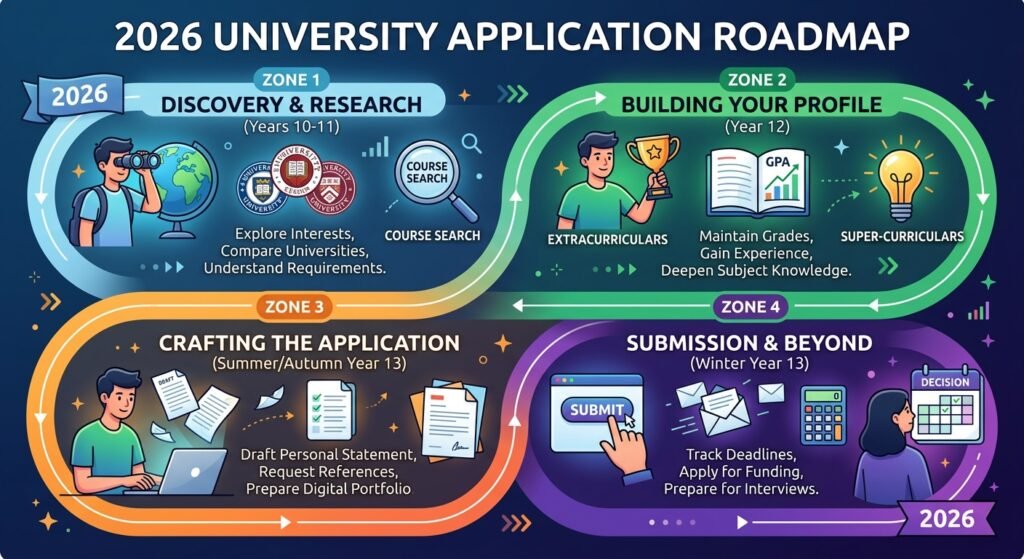

Applying to a university is one of the most important milestones in a student’s academic journey. A strong university application can open doors to prestigious institutions, scholarship opportunities, and future career success. However, competition for admission to top universities has become increasingly intense. Every year, universities receive thousands of applications from talented students, making it essential for applicants to stand out from the crowd.
A winning university application is not simply about achieving high grades. Admission officers evaluate multiple aspects of a student’s profile, including academic performance, extracurricular involvement, leadership experience, personal qualities, recommendation letters, and future goals. Universities seek students who demonstrate not only academic potential but also the ability to contribute positively to their campus communities.
Whether you are applying to universities in the United States, Canada, the United Kingdom, Australia, or another country, understanding the application process can significantly improve your chances of success. This comprehensive guide explains every step involved in preparing a strong university application in 2026 and provides practical strategies to help students maximize their opportunities.
Understanding the University Admissions Process
Before beginning the application process, students should understand how universities evaluate applications.
Admission committees typically review several factors, including:
- Academic records
- Standardized test scores (where applicable)
- Personal statements
- Recommendation letters
- Extracurricular activities
- Leadership experience
- Community involvement
- Awards and achievements
- Interviews (for some programs)
Different universities place varying levels of importance on each component. Some institutions focus heavily on academic achievement, while others take a holistic approach that considers a student’s overall profile.
Understanding the specific requirements of each university is essential for preparing a successful application.
Step 1: Research Universities Thoroughly
One of the biggest mistakes students make is applying to universities without conducting sufficient research.
Before preparing applications, students should evaluate:
Academic Programs
Ensure the university offers strong programs in your intended field of study.
Reputation
Research university rankings, faculty expertise, and graduate outcomes.
Campus Environment
Consider campus culture, diversity, student life, and available support services.
Location
Evaluate climate, transportation, safety, and living costs.
Financial Considerations
Compare tuition fees, housing expenses, scholarships, and financial aid opportunities.
Selecting universities that align with your goals increases the likelihood of both admission success and long-term satisfaction.
Step 2: Maintain Strong Academic Performance
Academic performance remains one of the most important factors in university admissions.
Universities carefully review:
- Grade point average (GPA)
- Course difficulty
- Subject performance
- Academic consistency
Students should challenge themselves by taking rigorous courses when possible while maintaining strong grades.
Admissions officers often prefer students who demonstrate steady academic improvement over time.
Tips for Academic Success
- Attend classes regularly
- Complete assignments on time
- Develop effective study habits
- Seek help when needed
- Focus on core academic subjects
Consistent academic achievement demonstrates readiness for university-level coursework.
Step 3: Build an Impressive Extracurricular Profile
Universities seek well-rounded students who contribute beyond the classroom.
Extracurricular activities help demonstrate:
- Leadership
- Initiative
- Teamwork
- Commitment
- Personal interests
Students do not need to participate in dozens of activities. Instead, they should focus on meaningful involvement in a few areas.
Examples include:
Student Government
Leadership positions show responsibility and organizational skills.
Sports
Athletics demonstrate discipline, teamwork, and perseverance.
Volunteer Work
Community service reflects social responsibility and compassion.
Academic Clubs
Participation highlights intellectual curiosity and dedication to learning.
Arts and Creativity
Music, drama, writing, and visual arts showcase creativity and talent.
Quality involvement often matters more than quantity.
Step 4: Develop Leadership Experience
Leadership is highly valued by universities because it indicates potential for future success.
Students can develop leadership skills through:
- Club leadership positions
- Community projects
- Volunteer initiatives
- Team captain roles
- Entrepreneurial activities
Leadership does not always require an official title. Taking initiative to solve problems or organize projects can also demonstrate leadership qualities.
Admissions officers often look for evidence that applicants positively influence others and contribute to their communities.
Step 5: Prepare for Standardized Tests
Although many universities have adopted test-optional policies, standardized tests may still strengthen applications.
Common exams include:
SAT
Widely used for undergraduate admissions.
ACT
An alternative to the SAT accepted by many institutions.
IELTS
Measures English-language proficiency.
TOEFL
Another widely accepted English proficiency examination.
Duolingo English Test
Increasingly accepted by universities worldwide.
Students should prepare thoroughly by:
- Practicing regularly
- Taking mock exams
- Identifying weak areas
- Managing test anxiety
Strong scores can enhance competitiveness and improve scholarship opportunities.
Step 6: Write an Outstanding Personal Statement
The personal statement is often one of the most influential parts of an application.
It allows students to tell their story and demonstrate qualities not reflected elsewhere in the application.
A strong personal statement should address:
- Academic interests
- Career aspirations
- Personal experiences
- Challenges overcome
- Leadership experiences
- Reasons for choosing the university
Characteristics of an Effective Essay
Authenticity
Admissions officers value genuine stories and honest reflections.
Specificity
Use concrete examples rather than vague statements.
Clarity
Organize ideas logically and communicate clearly.
Personal Growth
Demonstrate learning, development, and future potential.
Students should avoid copying templates or using overly generic language.
Step 7: Obtain Strong Recommendation Letters
Recommendation letters provide insight into an applicant’s abilities and character from an external perspective.
Strong recommendations can significantly strengthen applications.
Ideal Recommenders
Students should seek recommendations from individuals who know them well, such as:
- Teachers
- Professors
- School counselors
- Academic advisors
- Supervisors
What Makes a Strong Recommendation?
Effective recommendation letters typically discuss:
- Academic performance
- Work ethic
- Leadership qualities
- Personal character
- Contributions to the community
Students should request recommendations early and provide recommenders with sufficient information about their goals and achievements.
Step 8: Create a Comprehensive Resume
Many universities encourage applicants to submit resumes highlighting their accomplishments.
A strong student resume may include:
Academic Achievements
- GPA
- Honors
- Awards
Leadership Experience
- Club leadership
- Student government
- Project management
Volunteer Activities
- Community service
- Nonprofit involvement
Work Experience
- Part-time employment
- Internships
- Freelance projects
Skills
- Languages
- Technical skills
- Communication abilities
A well-organized resume helps admissions officers quickly understand an applicant’s strengths.
Step 9: Demonstrate Interest in Your Chosen Field
Universities prefer applicants who show genuine passion for their intended areas of study.
Students can demonstrate interest through:
Independent Learning
Taking online courses or conducting personal research.
Competitions
Participating in academic competitions related to the field.
Internships
Gaining practical experience through internships or job shadowing.
Projects
Completing relevant personal or community projects.
For example, a student interested in computer science might create software applications or participate in coding competitions.
Step 10: Prepare for University Interviews
Some universities require interviews as part of the admissions process.
Interviews allow admissions officers to assess:
- Communication skills
- Motivation
- Personality
- Academic interests
Common Interview Questions
- Why do you want to attend this university?
- What are your career goals?
- What challenges have you overcome?
- What leadership experiences have you had?
- How will you contribute to campus life?
Interview Preparation Tips
- Practice responses
- Research the university
- Dress professionally
- Maintain confidence
- Speak clearly and honestly
Preparation significantly improves interview performance.
Step 11: Apply for Scholarships Simultaneously
Many students focus entirely on admissions and forget about scholarships.
Scholarship applications often require:
- Essays
- Recommendation letters
- Academic records
- Leadership documentation
Applying early increases opportunities for financial assistance.
Students should research:
- Merit scholarships
- Need-based scholarships
- Government programs
- University awards
- Private scholarships
Financial planning is an important part of the university application process.
Common Application Mistakes to Avoid
Many qualified students weaken their applications through preventable errors.
Missing Deadlines
Late submissions may result in automatic rejection.
Generic Essays
Admissions officers quickly recognize essays lacking originality.
Incomplete Applications
Missing documents can delay or prevent admission decisions.
Ignoring Instructions
Failure to follow application guidelines reflects poor attention to detail.
Poor Proofreading
Grammar and spelling errors can create negative impressions.
Students should carefully review all materials before submission.
Building a Competitive Application Timeline
Starting early allows students to prepare stronger applications.
18–24 Months Before Application
- Research universities
- Explore academic interests
- Improve grades
12 Months Before Application
- Prepare for standardized tests
- Develop extracurricular involvement
6–9 Months Before Application
- Draft personal statements
- Request recommendation letters
3–6 Months Before Application
- Finalize essays
- Complete applications
Before Deadlines
- Review materials carefully
- Submit applications
- Apply for scholarships
Proper planning reduces stress and improves application quality.
International Student Considerations
International students often face additional requirements.
These may include:
Language Testing
Proof of English proficiency through IELTS, TOEFL, or similar exams.
Visa Documentation
Preparing immigration-related paperwork.
Financial Verification
Demonstrating the ability to cover educational expenses.
Credential Evaluation
Verifying foreign academic qualifications.
Students should begin preparing these documents well in advance.
The Importance of Authenticity
One of the most important factors in a successful university application is authenticity.
Admissions officers read thousands of applications annually. Genuine stories and honest reflections are far more compelling than exaggerated achievements or copied essays.
Students should focus on:
- Personal experiences
- Meaningful accomplishments
- Real challenges
- Genuine aspirations
Authenticity helps applicants stand out and create memorable impressions.
Future Trends in University Admissions
University admissions continue to evolve.
Several trends are shaping admissions decisions in 2026:
Holistic Review
Universities increasingly evaluate students beyond grades and test scores.
Test-Optional Policies
Many institutions continue reducing reliance on standardized exams.
Digital Portfolios
Some programs encourage applicants to showcase work through online portfolios.
Leadership and Impact
Universities increasingly value applicants who demonstrate positive contributions to society.
Understanding these trends can help students prepare stronger applications.