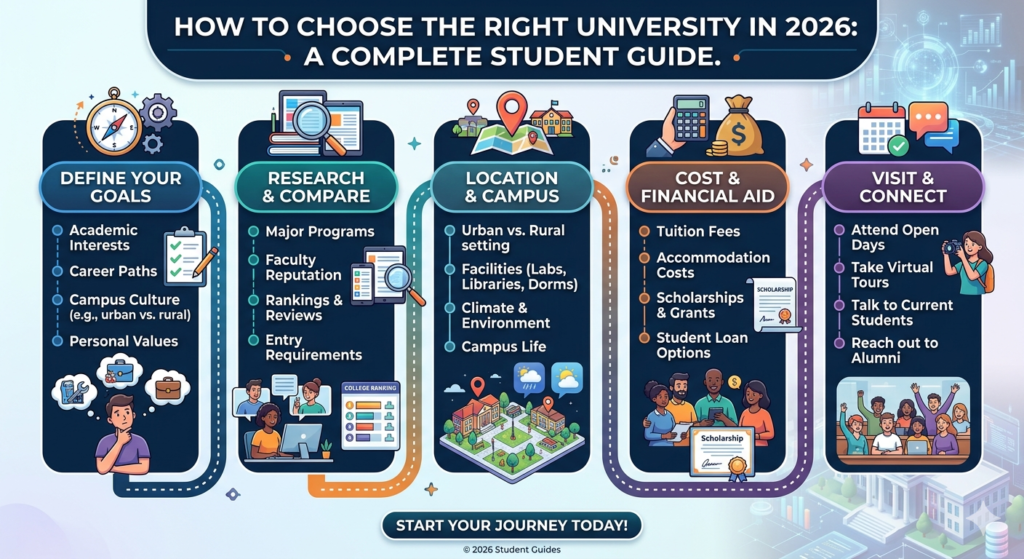

Choosing the right university is one of the most important decisions a student will make. The university you attend can influence your academic growth, career opportunities, personal development, and future success. With thousands of universities around the world offering a wide range of programs, selecting the best institution can feel overwhelming. However, by understanding your goals and carefully evaluating your options, you can make an informed decision that supports your future aspirations.
Understanding Your Academic Goals
Before researching universities, it is important to identify your academic interests and career objectives. Ask yourself what subjects you enjoy studying and what kind of career you hope to pursue after graduation. Some universities are known for their excellence in engineering, while others may specialize in business, medicine, law, or the arts.
When your academic goals are clear, it becomes easier to narrow down your choices and focus on institutions that offer strong programs in your chosen field. Reviewing course descriptions, faculty qualifications, and academic resources can help determine whether a university aligns with your educational interests.
Research University Rankings Carefully
University rankings are often used as a starting point when comparing institutions. Rankings evaluate factors such as academic reputation, research output, student satisfaction, and graduate employability. While rankings can provide useful insights, they should not be the only factor in your decision.
A university that ranks lower overall may still offer an excellent program in your specific field of study. Students should look beyond general rankings and explore subject-specific rankings that reflect their academic interests.
Consider Location and Campus Environment
The location of a university can significantly affect your overall experience. Some students prefer large cities with diverse opportunities and vibrant social lives, while others enjoy smaller towns that provide a quieter and more focused learning environment.
Climate, transportation, safety, and cost of living should also be considered. International students may need to adapt to different cultures, languages, and lifestyles, making location an important factor in their comfort and success.
Visiting campuses, if possible, can provide valuable insights into the environment. Virtual campus tours are also becoming increasingly popular and can help students explore facilities from anywhere in the world.
Evaluate Tuition Fees and Financial Aid
Higher education can be expensive, making financial planning essential. Students should compare tuition fees, accommodation costs, textbooks, transportation, and other living expenses when evaluating universities.
Many institutions offer scholarships, grants, and financial aid programs that can reduce the overall cost of education. Merit-based scholarships reward academic achievement, while need-based scholarships assist students with financial challenges.
Researching available funding opportunities early can increase your chances of receiving financial assistance and minimizing student debt.
Examine Graduate Employment Outcomes
One of the primary reasons students attend university is to improve their career prospects. Therefore, it is important to investigate graduate employment rates and career support services.
Universities with strong industry connections often provide internships, cooperative education programs, networking opportunities, and career counseling services. These experiences can help students gain practical skills and secure employment after graduation.
Reviewing employment statistics and alumni success stories can provide valuable information about a university’s ability to prepare students for the workforce.
Assess Campus Facilities and Resources
Modern universities provide more than classrooms and lecture halls. Students should consider the quality of libraries, laboratories, research centers, sports facilities, student housing, and technology resources.
Strong academic support services, including tutoring programs, writing centers, and mental health resources, can contribute significantly to student success. A well-equipped campus environment can enhance both academic performance and personal development.
Explore Student Life and Extracurricular Activities
University life extends beyond academics. Clubs, societies, sports teams, volunteer opportunities, and cultural organizations allow students to develop leadership skills, build friendships, and gain valuable experiences.
A vibrant campus community can help students feel connected and engaged. Reviewing student organizations and extracurricular opportunities can provide a better understanding of campus culture.
Review Admission Requirements
Different universities have varying admission standards. Students should carefully review academic requirements, standardized test scores, language proficiency requirements, and application deadlines.
Preparing application materials early can reduce stress and improve the quality of submissions. Strong personal statements, recommendation letters, and academic records can significantly increase admission chances.
Consider International Opportunities
Many universities offer study-abroad programs, exchange partnerships, and international research opportunities. These experiences can broaden cultural understanding, improve language skills, and enhance employability.
Students interested in global careers may benefit from institutions with strong international networks and diverse student populations.
Make an Informed Decision
After gathering information, create a shortlist of universities that meet your academic, financial, and personal preferences. Compare the advantages and disadvantages of each option and discuss your choices with family members, teachers, counselors, or current students.
Choosing a university is not simply about prestige. The best university is one that supports your goals, provides a positive learning environment, and offers opportunities for growth and success.